Wisdom Teeth Extraction in Saskatoon SK
Wisdom teeth removal is one of the most commonly performed oral surgeries due to the frequent problems wisdom teeth cause when left in place. At Saskatoon Oral Surgery, we offer safe and comfortable wisdom tooth removal using the latest techniques to minimize recovery times and ensure optimal results.
What are Wisdom Teeth?
The third and last set of molars is commonly referred to as wisdom teeth. They are the last teeth to develop and are located behind the second molars, in the back of the mouth. Most people have one in each of the upper and lower jaws on both sides of their mouth. The wisdom teeth typically develop between the mid-teen years and the early twenties.
Signs You May Need Wisdom Teeth Extraction
Wisdom teeth extraction in Saskatoon is advisable if you begin experiencing any of the following symptoms:
- Severe toothache
- Swollen, sensitive gums
- Pus or bloody discharge in the back of the mouth
- Difficulty opening or closing your mouth
- Pain when biting down or chewing
- Recurring headaches, jaw pain, or pain around the eye
- A painful cheekbone
- Sinus pain and pressure not caused by sinus issues
If you have one or more of the above symptoms and suspect it may be due to an impacted third molar, our oral surgeons in Saskatoon can remove your wisdom teeth and relieve your pain.
Expert care for wisdom teeth removal.
Whether it’s pain, crowding, or prevention, Saskatoon Oral Surgery ensures a smooth, comfortable experience. If you’ve been referred for wisdom tooth extraction, learn what to expect and how we can help.
Our Wisdom Tooth Extraction Process
Studies have shown that early evaluation and treatment yield superior outcomes for patients. Patients should generally be evaluated by their dentist, orthodontist, dental therapist etc. in their mid-teen years. If they determine that your wisdom teeth need to be removed, a referral will be sent to our office and we will schedule you for an appointment at a time convenient for you.
The Day of Surgery
We begin with an oral and radiographic examination by one of our oral surgeons. Most people prefer to be unaware of the experience when they have their wisdom teeth removed and usually decide to be sedated. All outpatient surgery is performed under appropriate anesthesia to maximize your comfort. Our office staff has the training, licensing, and experience to provide the various types of anesthesia safely and effectively.
On the day of your procedure, you will be given medications to help minimize post-operative pain and swelling. We request that a parent or responsible adult accompany you to the office, remain in the office during your appointment and remain with you for the remainder of the day. The procedure will take about 30 to 45 minutes, and you can expect to be in the office for approximately 90 minutes. Recent advances in medicine and technology allow patients to undergo wisdom tooth removal in a manner that promotes rapid healing and minimal post-operative discomfort. State-of-the-art sterilization and infection control techniques are consistently employed.
You must have nothing to eat or drink (excluding prescription medications with a sip of water) for at least 8 hours. This does not mean you should try to fit in one “last meal” exactly 8 hours before your surgery. Having anything in your stomach can increase the risk of serious anesthetic complications, including nausea and vomiting. Your procedure may be rescheduled if you have not adhered to these guidelines. If you are a smoker, it is recommended that you try to quit before your surgery, as it can lead to post-operative complications.
When you are seated in the surgical room, we will make every effort to ensure your comfort. If you are going to be sedated, we usually will place an IV before seeing the surgeon so you are ready to go. This is a quick and nearly painless procedure that ensures optimal delivery of your medication. Local anesthesia is given to you afterwards to provide comfort and allow adequate time to travel home and rest. You will be sleepy for a significant portion of the day.
If your surgery requires stitches, these will dissolve within 5 to 10 days and do not need to be removed. You may also notice a sensation of your gums feeling swollen and pulling away from your teeth. This is all part of the normal recovery and will subside in several days.
Recovery After Wisdom Teeth Removal in Saskatoon
Once the local anesthesia wears off, you may require prescription pain medication. Please thoroughly follow the pain medication instructions that the nurse discusses while you and your escort are in recovery. You will be given prescriptions for pain control. Take your prescriptions as directed at the proper times. This will ensure you have optimal pain control through the healing stage. The local anesthesia may last until the following day, and any numbness should not be confused with an injury to your nerve.
Why Choose Saskatoon Oral Surgery for Wisdom Teeth Extractions
At Saskatoon Oral Surgery, you benefit from the expertise of multiple oral surgeons, each of whom has years of experience and advanced training. Our clinic prides itself on utilizing the latest technologies to accurately diagnose and treat impacted wisdom teeth and performing wisdom teeth extractions using techniques that minimize trauma and ensure a comfortable and smooth recovery. The doctors and dental care team are fully trained and certified in all types of dental anesthesia to ensure you are relaxed and anxiety-free throughout your surgery.
Wisdom Teeth Removal FAQs
What happens if I don’t remove my wisdom tooth?
Most people do not have enough room in their mouths for their third molars to fully erupt and function as healthy, working teeth for chewing. Several problems can occur if wisdom teeth are left untreated. Impacted wisdom teeth should be removed before their root structure is fully developed. In some patients, it may occur as early as the pre-teen or early teenage years, while in others, it may not appear until the early twenties. Problems tend to occur with increasing frequency after the age of 30. Some of the possible issues related to not removing your wisdom teeth include:
- Infection: This can include pain, swelling, and difficulty chewing and swallowing.
- Cysts: A cyst (a fluid-filled sac) can develop in the jawbone around an impacted wisdom tooth, expanding and damaging or destroying the bone. In rare instances, tumors can develop.
- Crowding or Damage to Adjacent Teeth: Wisdom teeth can directly affect your other teeth, pushing them forward and out of alignment, or causing damage such as cracks or infection in the second molars.
As wisdom teeth develop, the roots become longer and the jawbone denser. When it is necessary to remove impacted wisdom teeth in your thirties, forties, or beyond, the post-operative recovery is longer and more uncomfortable, with a higher risk of complications. Treating these complications is often more difficult and less predictable than with a younger patient. Suppose your impacted wisdom teeth are not removed in your teenage years or early in your twenties, and they are completely impacted in the bone. In that case, it may be advisable to wait until a localized problem (such as cyst formation or localized gum disease and bone loss) develops. In general, you will heal faster, more predictably, and have fewer complications if treated in your teens or early twenties.
Does wisdom teeth removal hurt?
During the surgery, you will not feel any pain because you are sedated, and we use a local anesthesia to numb the area. Within 24 hours, the sedative will wear off, and you may experience mild to moderate discomfort and swelling. This usually peaks around the third day, then subsides. Many patients can alleviate their pain with over-the-counter medications and ice packs or cold compresses. However, if you need a prescription for pain medication, we can provide one for you.
What can I eat after having my wisdom teeth removed?
We recommend starting your post-operative diet with cool, soft foods such as Jell-O, soup, pudding, yogurt, mashed potatoes, hummus, and scrambled eggs, and gradually increasing the substance as your body permits.
How long is the recovery after wisdom teeth removal?
You will need to rest at home for two or three days, so plan to take those days off from work or school. During this time, sleeping and staying hydrated are central to your healing process. After the third day, pain and swelling will begin to subside. Most patients feel “back to normal” at the end of the first week.
For more information about Wisdom Teeth, please visit:
Expert care for wisdom teeth removal.
Whether it’s pain, crowding, or prevention, Saskatoon Oral Surgery ensures a smooth, comfortable experience. If you’ve been referred for wisdom tooth extraction, learn what to expect and how we can help.
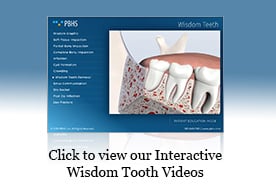
Wisdom Teeth Presentation
To provide you with a better understanding of wisdom teeth, we have provided the following multimedia presentation. Many common questions pertaining to wisdom teeth are discussed.